
Vacuum Casting or Injection Moulding?
The same part, two cost shapes. Casting has almost no start-up cost and costs more per piece; moulding is the reverse.
Vacuum casting and injection moulding are not competing for the same job. Casting carries tens of parts with no tooling to pay for. Injection moulding carries hundreds to thousands, and its tool cost is the price of that. The decision is a quantity question before it is a quality question.
Two cost shapes
| Vacuum casting | Rapid tooling + moulding | Production steel | |
|---|---|---|---|
| Start-up cost | Master pattern and a silicone mould. Low. | A real mould, aluminium or steel. Meaningful. | The largest one-off in the programme. |
| Cost per part | Higher, largely labour and resin. | Lower. The cycle is short and repeatable. | Lowest at volume. |
| Right band | 10 to a few hundred. | a few hundred to a few thousand. | Thousands and above. |
| Material choice | Casting resins, soft or hard, colour tunable. | Production grades, hot runner and multi-cavity possible. | Full production grades. |
| Surface | Copies a polished master pattern; good cosmetic faces. | Optical-grade polish and textured finishes in the tool. | Tooled texture, most consistent. |
| When data changes | Cheap: re-cut the pattern, re-make the mould. | Mould modification, priced per change. | Expensive. Steel punishes late design changes. |
What casting gives up
A silicone mould has a limited copy count. Once it is exhausted the mould is re-made from the master pattern, which is fine across a batch of covers and unsustainable across ten thousand. Casting resins also behave like production plastics without being the same grades: for a cosmetic or fit check that is enough, for a certified mechanical test it may not be.
Repeatability is the other give. Every pour is a hand-involved cycle, so a batch is consistent in a way that a moulded batch, running the same shot on the same machine, is more consistently. Tolerances are checked on inspection; the variation across a cast batch is something we plan for rather than claim away.
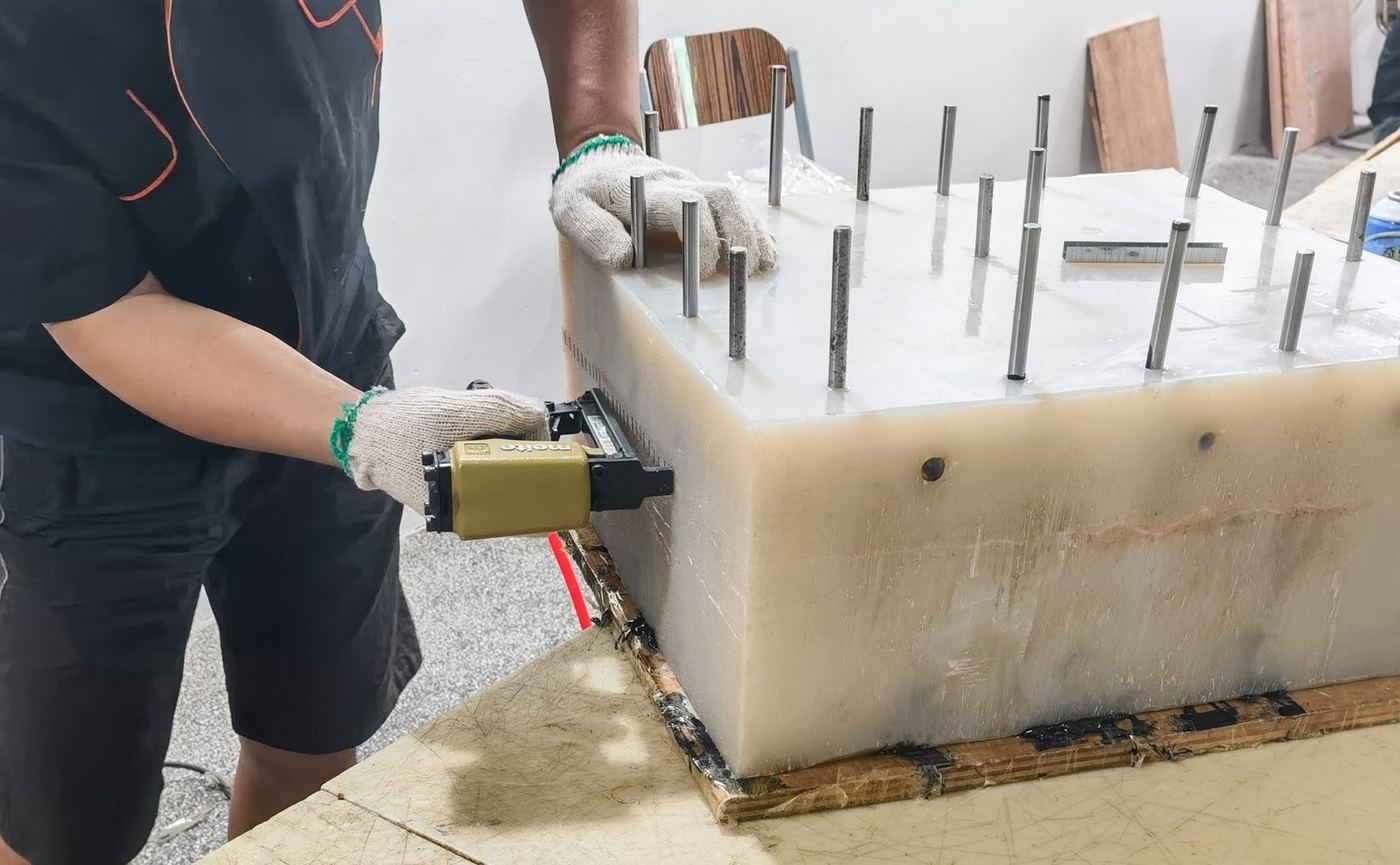 Mould prepared for vacuum pour
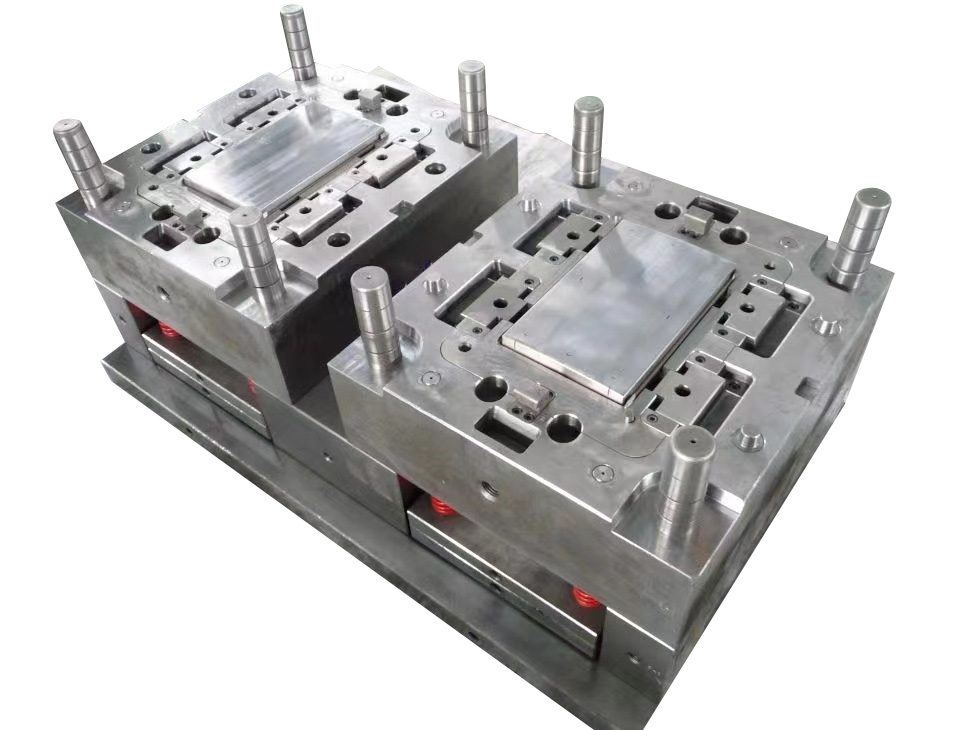 Multi-cavity rapid tool
Where RIM sits
Reaction injection moulding goes the other way from the small end: it covers larger enclosures and structural parts that are too big or too low-volume for conventional tooling. A torso shell or a fairing that a machining centre could cut but should not, because of the hours, often lands in RIM.
The bridge nobody plans for
Programmes rarely stop at one band. A cover batch of 60 for a trade show becomes 400 for a pilot launch becomes 4,000 for a retail commitment. What matters is that the geometry stays traceable across those steps: the master pattern, the tool and the production steel should all descend from the same approved data, with the trial history written down. That is why T0 through T3 exists, with an improvement report at T1 and T2 and sign-off at T3.
Questions buyers ask
How many parts can one vacuum casting mould produce?
A silicone mould has a limited copy count and is re-made from the master pattern when it runs out. That is what makes vacuum casting right for tens of parts and wrong for tens of thousands. Send us your quantity and we will say which side of that line you are on.
Is an injection moulded part cheaper than a cast part?
Per part, usually yes, once the tool cost is spread over enough pieces. The tool is the step change: casting has almost no one-off cost and a higher per-part cost, rapid tooling has a one-off cost and a much lower per-part cost.
Can a cast part use the production material?
Not always. Vacuum casting uses casting resins, which behave like many production plastics but are not the same grades that get injection moulded. Where the exact grade matters for a test, a machined prototype in production-equivalent stock is the better stand-in.
Send the drawings, get a DFM view back
Rocky Chen replies with a process route, the tolerance risks we see in your data and a quotation — usually within one working day.