
Humanoid Robot Prototyping
Complete shells, joints and frames for humanoid robots, robotic arms and automation platforms — from one concept build to small batches of cosmetic covers.
Everoyal Precision delivers complete humanoid robot prototypes: torso shells, limb covers, joint housings, hand assemblies and structural frames, machined and finished at the production base under Everoyal inspection.
Structural parts
- CNC machining of aluminium and engineering-plastic parts to ±0.01 mm on precision bores
- Turning-and-milling compound work for rotational joints, shafts and bushings
- Sheet metal frames and battery enclosures
Cosmetic parts
- Vacuum casting for small batches of covers in tunable colours, soft or hard resin
- Surface finishing: anodising, painting, sandblasting, polishing
- Silk-screen and laser marking for graphics and traceability
Parts CNC cannot cut
- Plastic and metal 3D printing for internal brackets and lattice structures
- Printed, finished and coloured at the same base, no external hand-off
- Bridge quantities before tooling is released
What a robot programme looks like when it leaves us
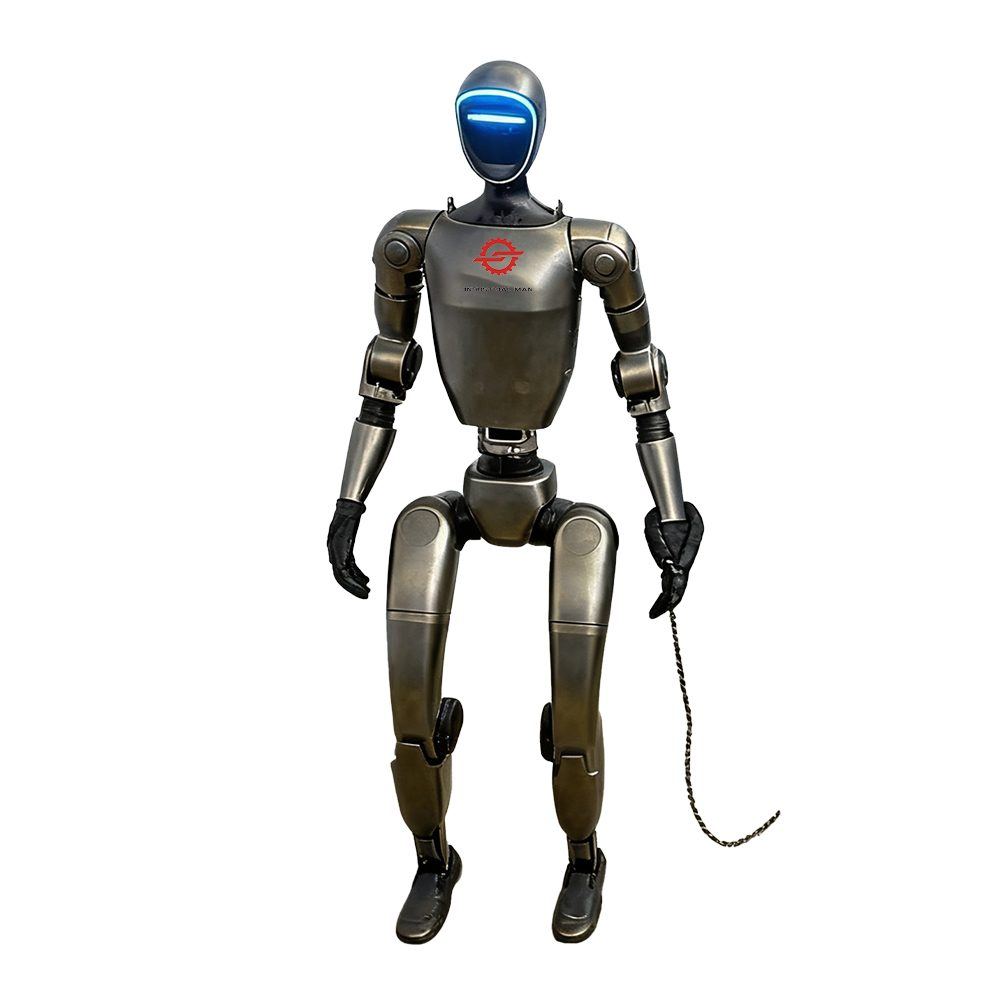
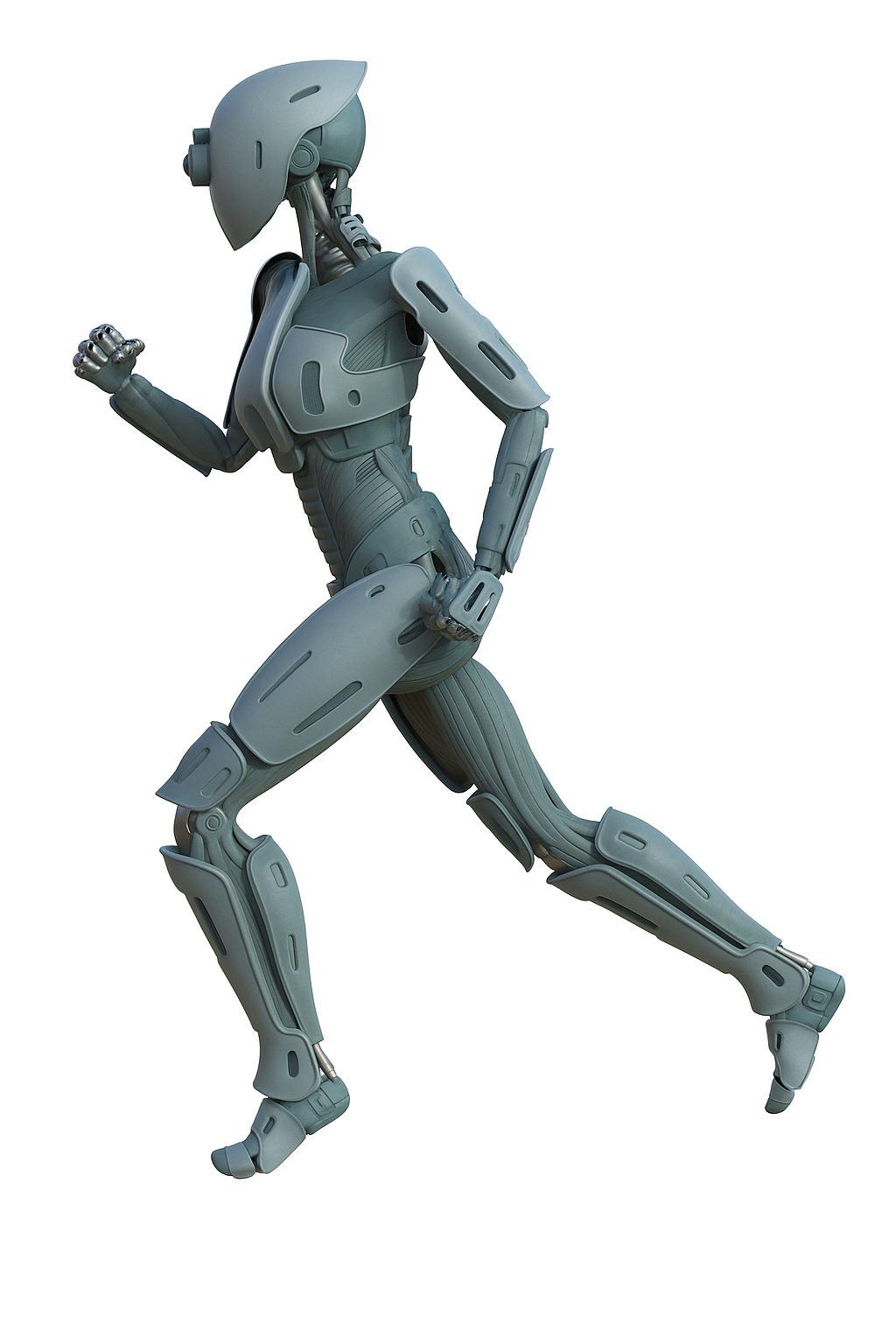
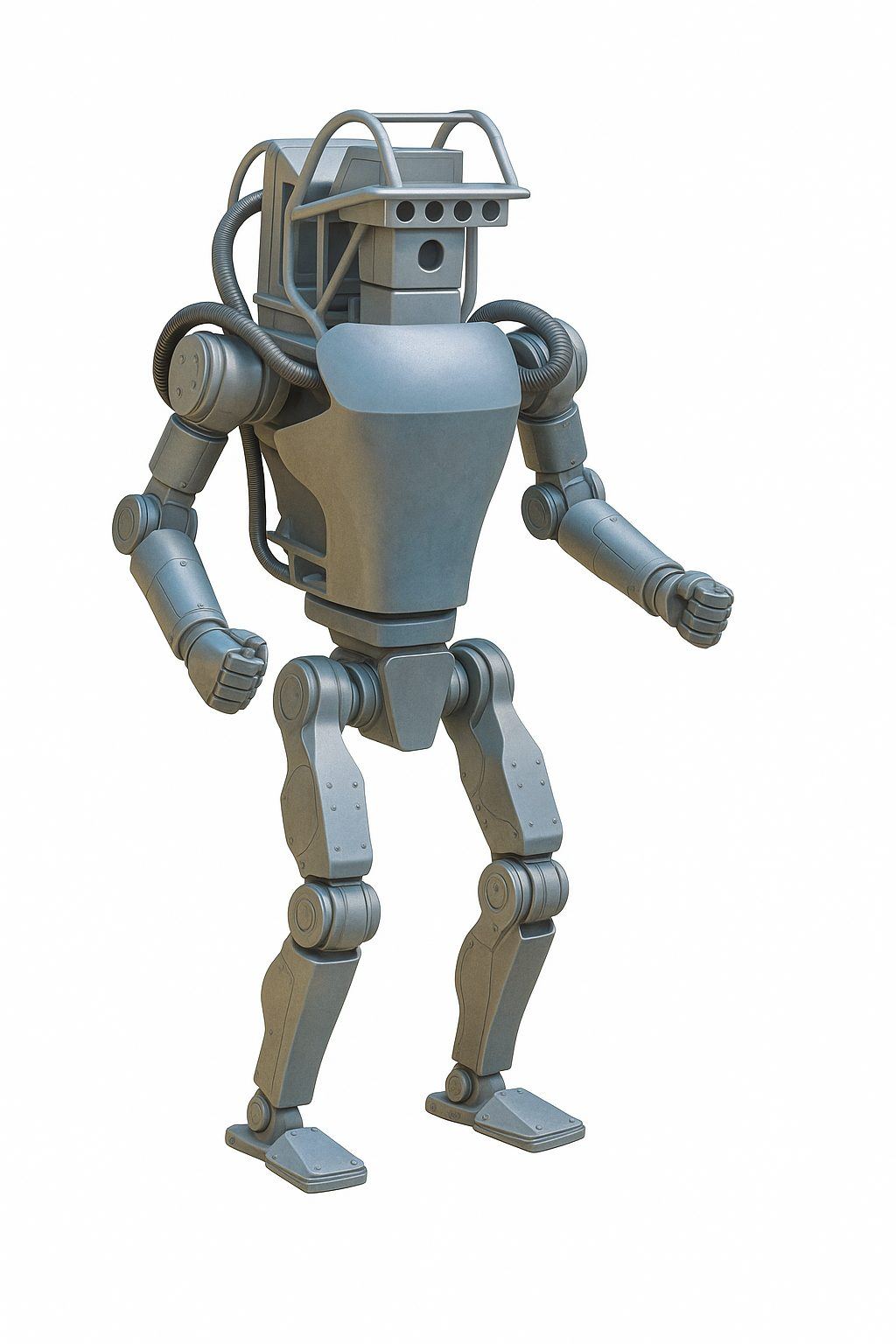
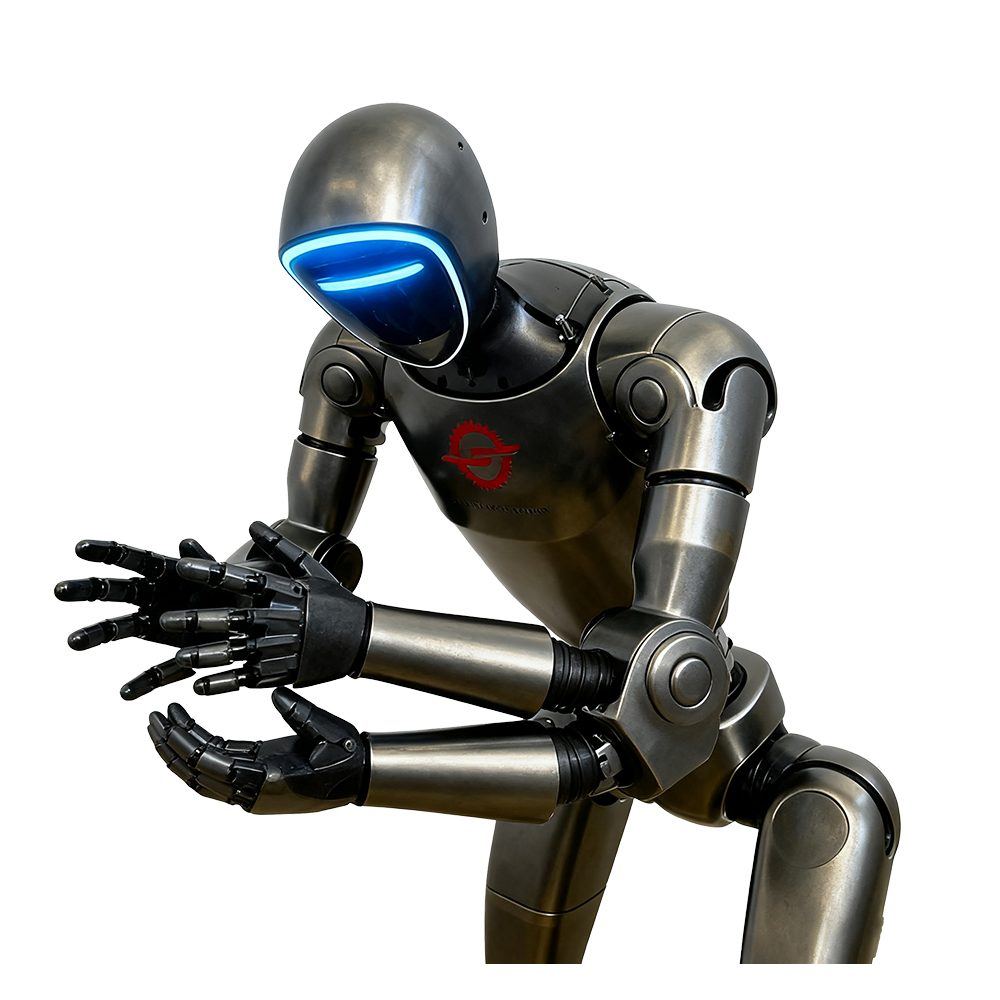
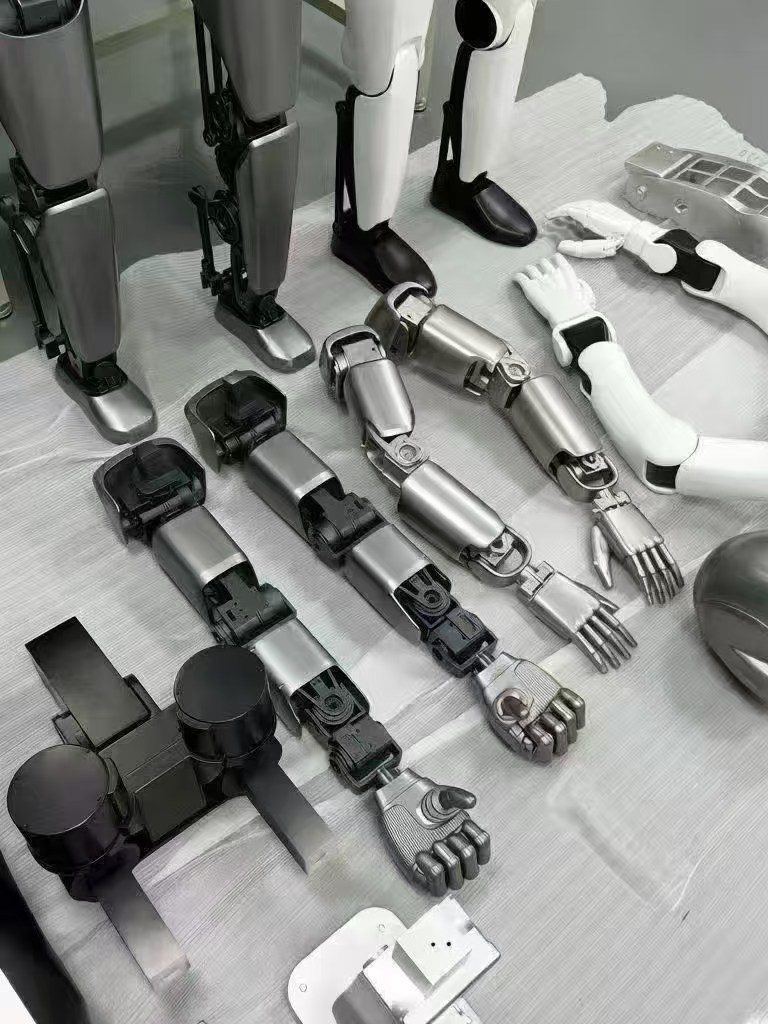 Limb and joint assemblies staged for inspection
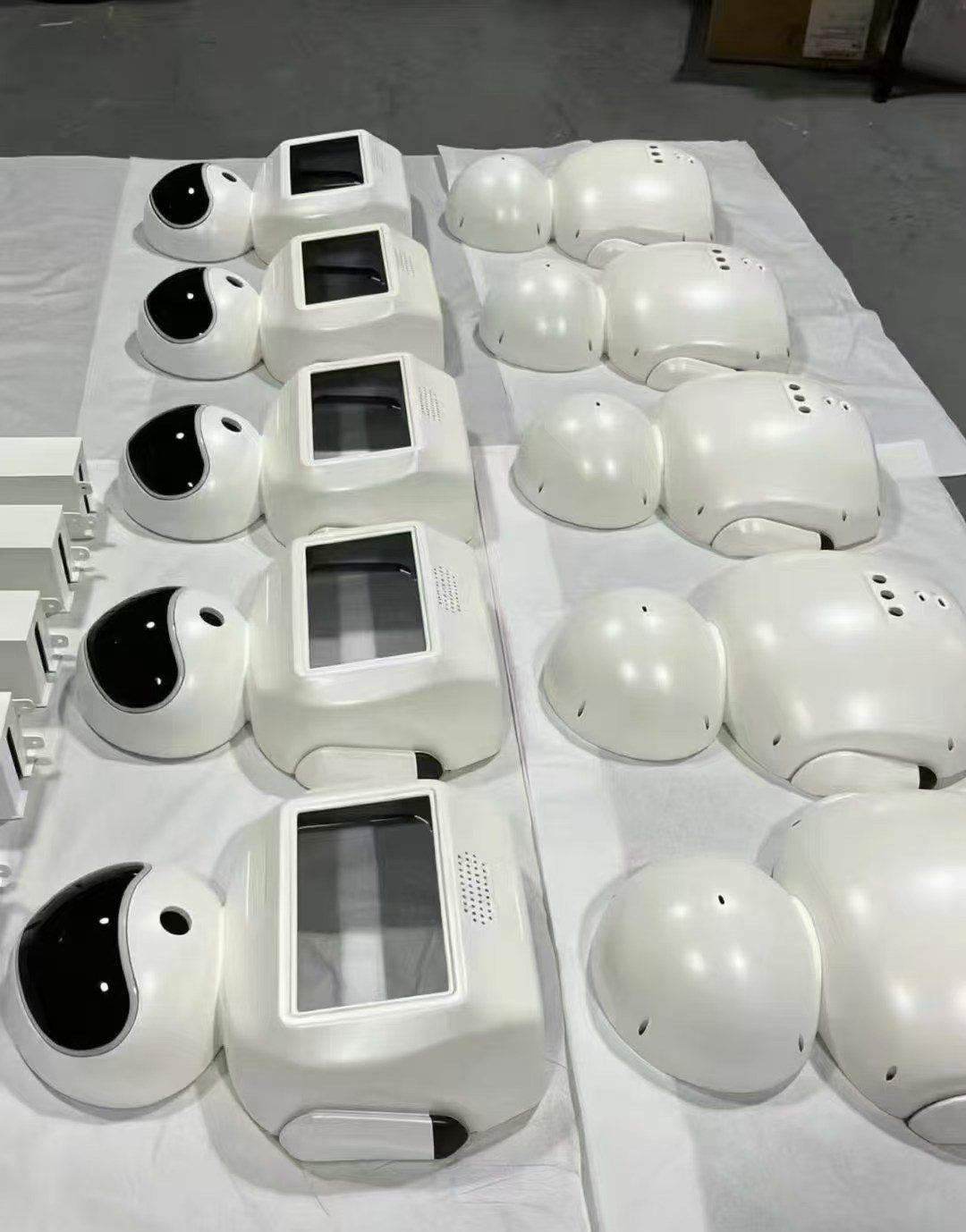 Head and body batches awaiting assembly
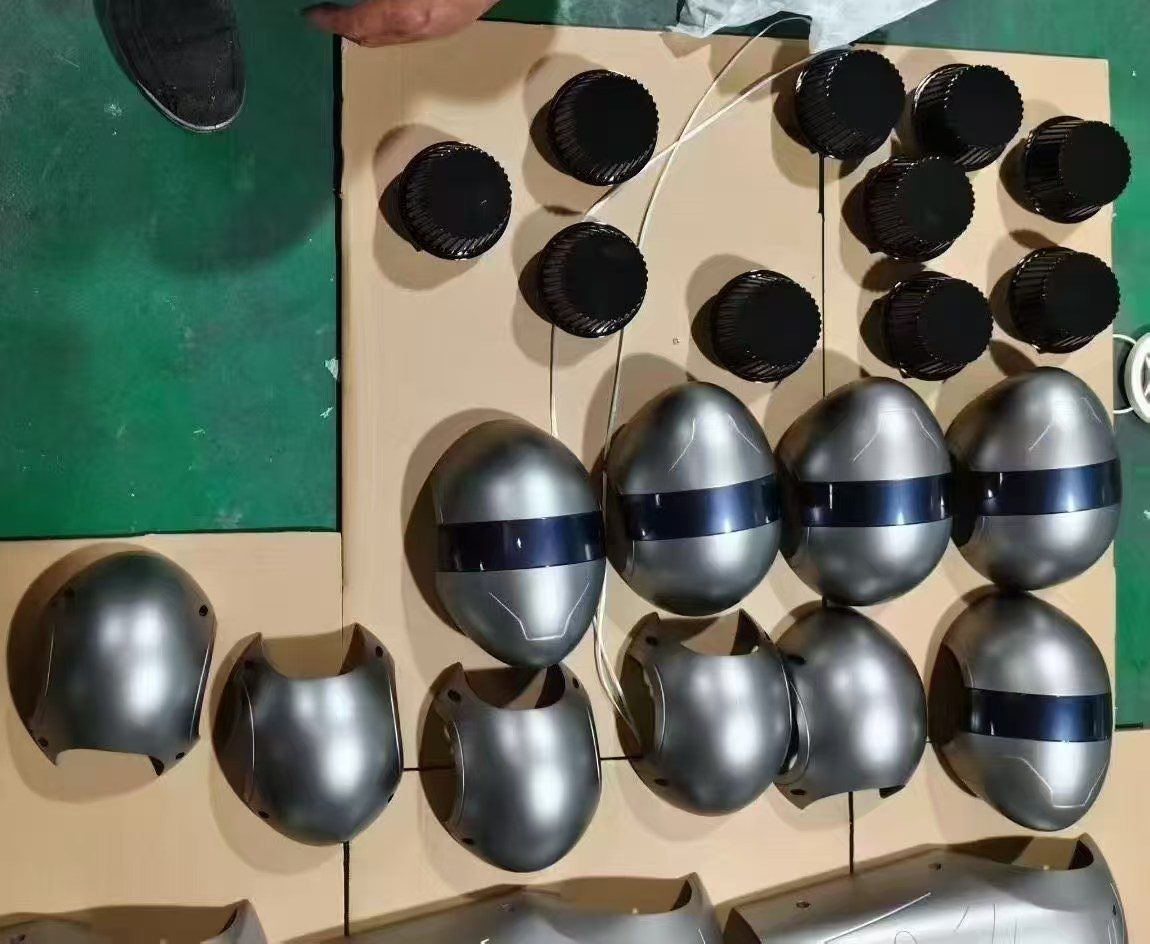 Dome and head covers after polishing
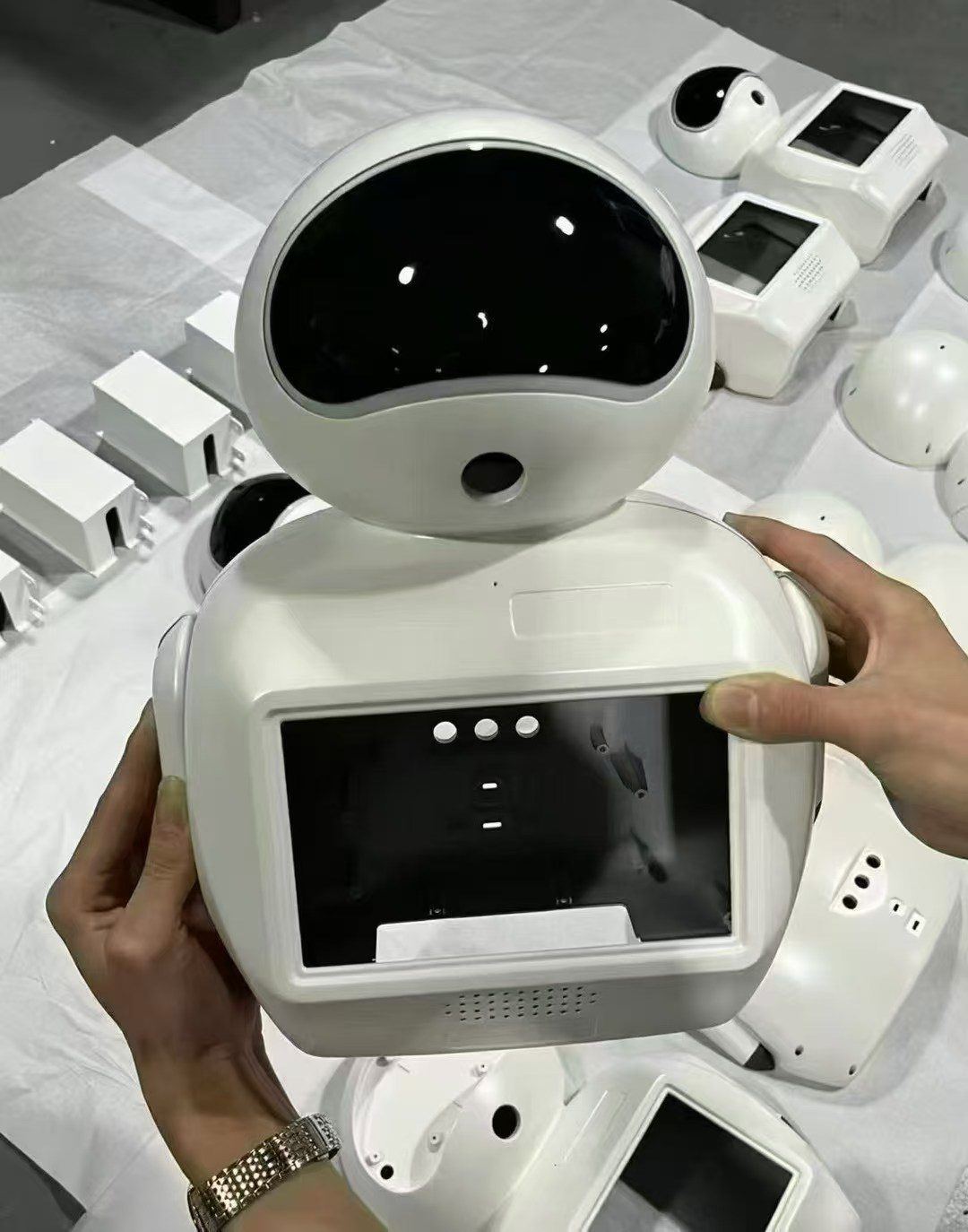 Finished service robot unit, screen integration
Robot figures shown as renders are representative renders of humanoid robot prototype programmes. Photographs of parts, workshops and assemblies were taken at the production base.
Components move in controlled batches
100%
Sample inspection. Full inspection on all prototype samples and machined parts.
10–1,000s
Prototype to small batch. Vacuum casting and rapid tooling bridge the gap to moulded volume.
2 shifts
24-hour operation across two production lines at the Suzhou base, managed by Everoyal.
1 base
Machining to assembly. Frames, joints, enclosures, covers and brackets under one contract.
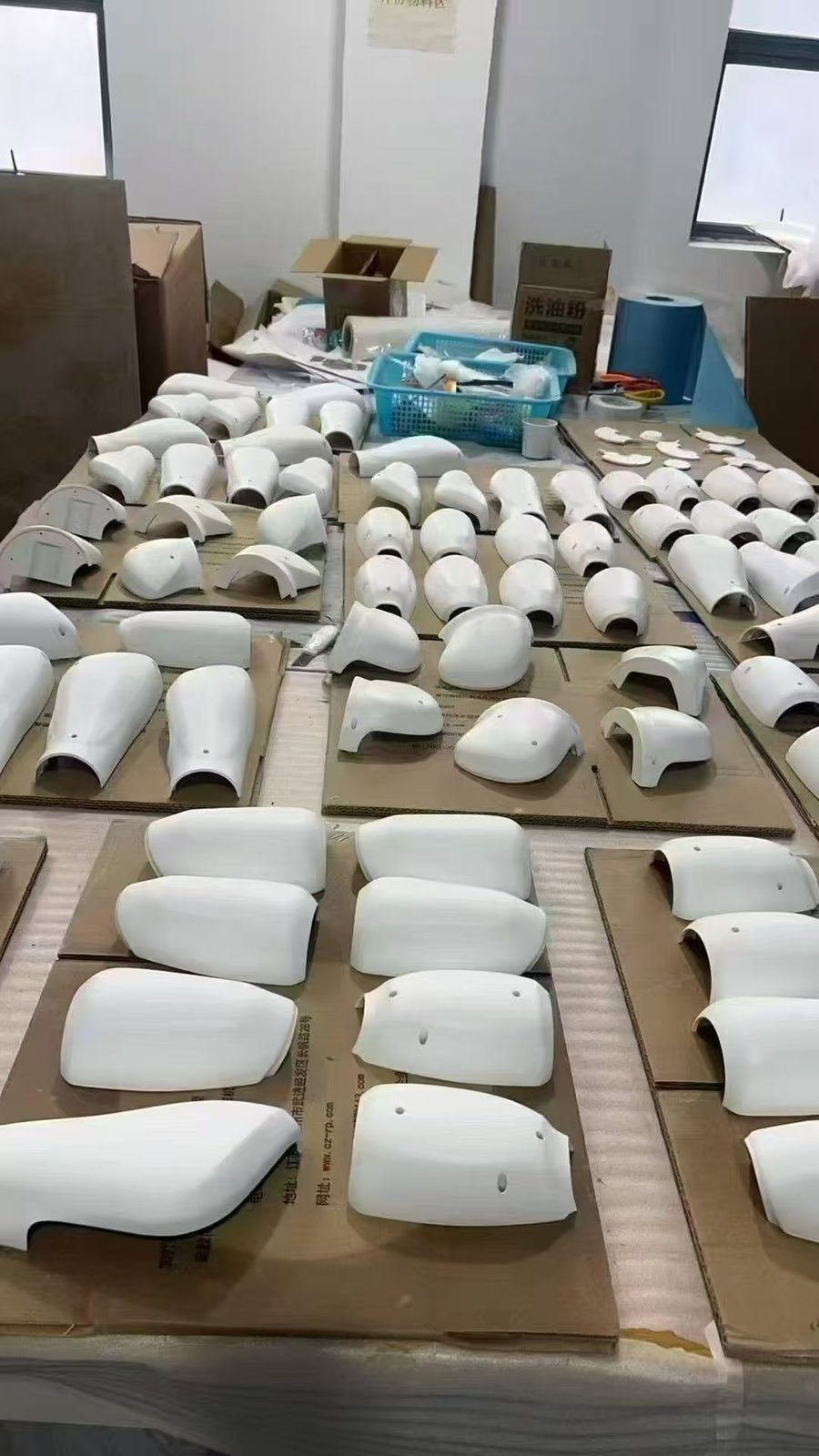 Small-batch covers staged for inspection
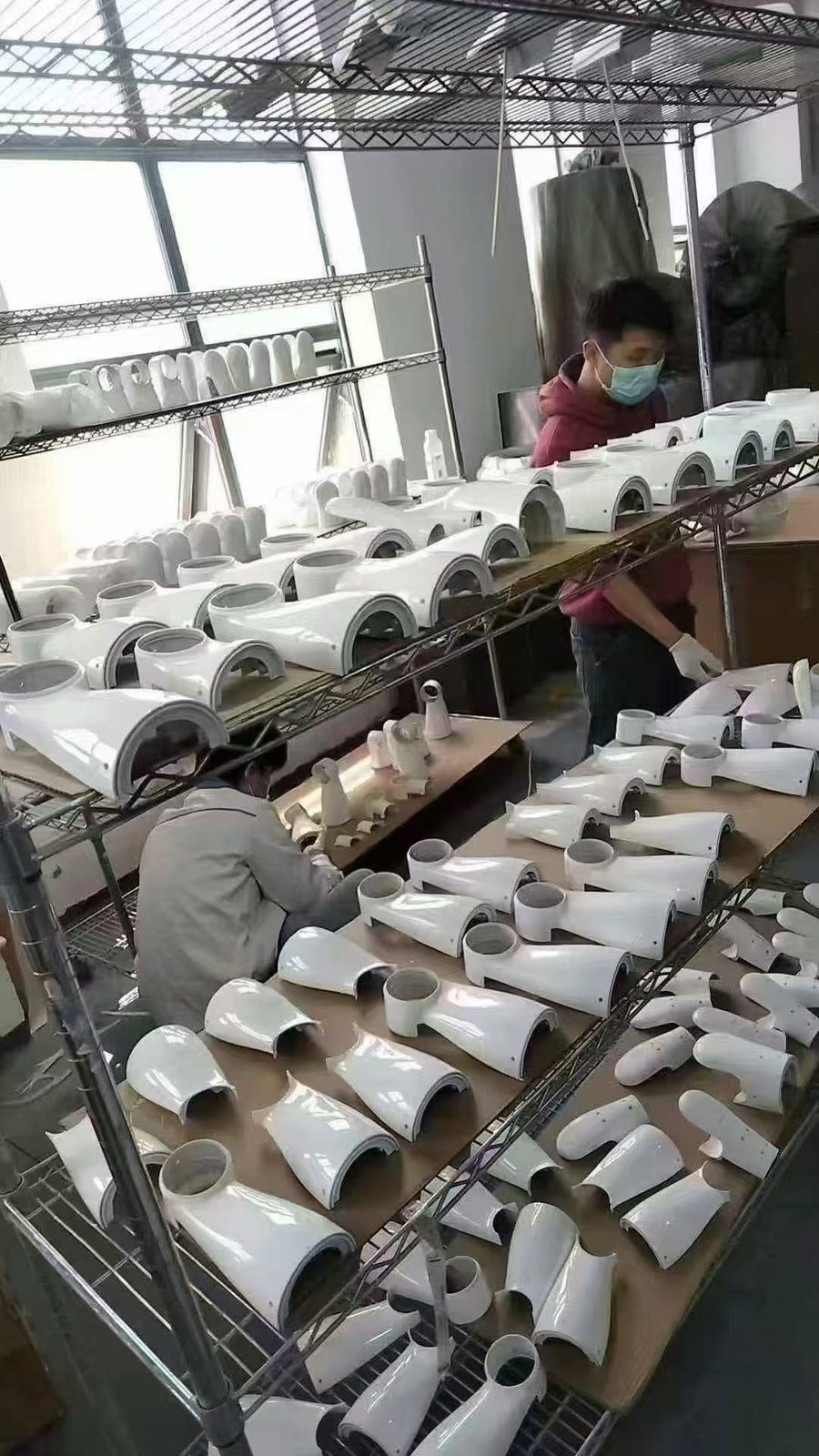 Cover stock racked between process steps
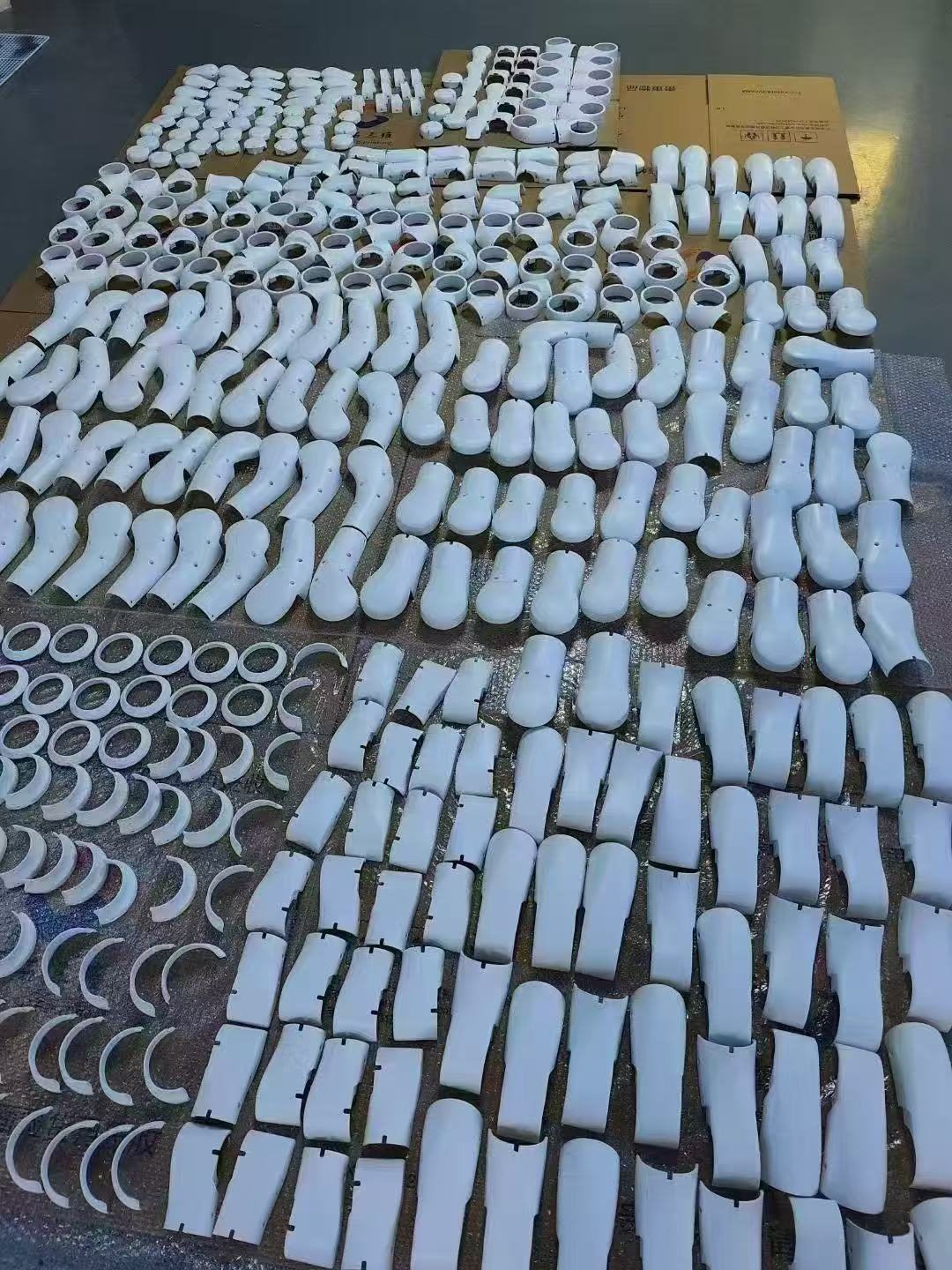 Finished covers staged at batch scale
Robot programme FAQs
Can you match an existing robot’s shell surface?
Send the surface you want: painted, anodised, sandblasted or polished, plus a colour reference. Cosmetic covers are vacuum cast or machined, then finished and colour matched at the base. We confirm the finish on the first article before the batch runs.
Do you supply the electronics, actuators or software?
No. Everoyal makes the hardware: shells, covers, brackets, joints, frames and machined parts. Integration of your own electronics and actuators can be done mechanically at our end, so the assembly fits first time.
What quantity does a robot programme usually start at?
Most start with one to five full sets for design review and exhibition use, then move to batches of 10 to a few thousand cosmetic covers once the geometry is frozen.
Send the drawings, get a DFM view back
Rocky Chen replies with a process route, the tolerance risks we see in your data and a quotation — usually within one working day.